
Wabi Sabi
Why do Disney's old films feel more alive than the new ones?

Disney’s golden age films had visible imperfections in a lot of frames. Modern Disney animation is technically flawless. So why do the old ones feel more alive?
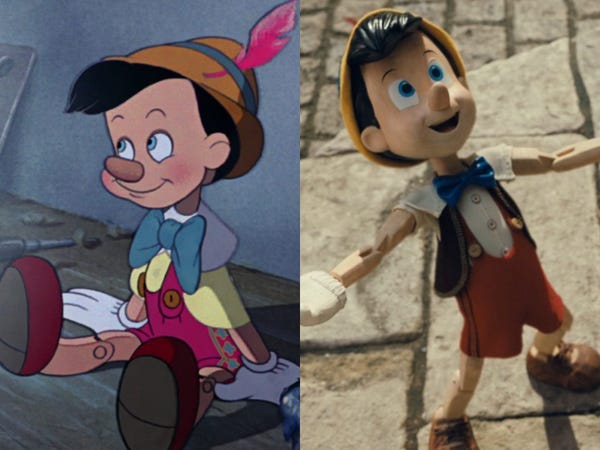
How does imperfection create better work?
The Illusion of Perfection
Perfection is a concept. It doesn’t exist in the real world. We’ve never observed something that has no flaws.
We created the notion of perfection because humans crave a state of completion, that something could be truly finished and not require any more work. The problem is that the human mind comes with the very thing that makes it impossible for us to ever declare that something is perfect or finished.
Our dissatisfaction is a biological imperative. The search for better is part of what propelled us to the top of the food chain.
Despite never having seen perfection, we can still gauge whether something is better or worse. Ugly or beautiful. Purposeful or meaningless. We assume that good is closer to perfection, but we are surrounded by examples that show us imperfection can drive beauty and meaning.
It’s when we prefer the unpolished, raw version of a song to its edited and professional-sounding counterpart, or when we prefer 2D drawn animation to 3D computer-generated.
In Pinocchio, when Geppetto’s clocks all chime at once, each clock moves with slightly different timing. The pendulums don’t swing in perfect unison. When Pinocchio’s nose grows after he lies, it doesn’t extend smoothly. It jerks and stutters in a way that feels organic, almost painful. These ‘flaws’ created realness. You could feel the human hand behind each frame. Modern animation, in its perfection, creates distance, too clean to feel alive.
Wabi-Sabi
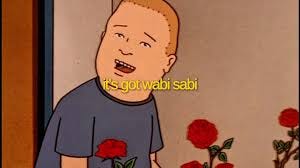
Wabi-Sabi, the Japanese art of impermanence, is an aesthetic philosophy centered around finding beauty in the imperfect, the impermanent, and the incomplete. It is fundamentally a rejection of the inherited neurosis of humanity, that which drives us to value the new, the complete, and the everlasting.
In discarding perfection as the end goal, liberty presents itself.
The rules that you assumed had to be followed all of a sudden aren’t applicable.
This is what distinguishes good artists from exceptional ones.
A good artist makes obviously good art. An exceptional artist makes deceptively great art.
With good art, you can explain why it is good and point to all the specific criteria that have been met that make it an acceptable piece.
With great art, you can, in fact, explain a bit of it and point to what makes it great, but only partly. There is something hidden and inexplicable inside it that differentiates it from anything else you have ever heard, seen, or felt.
But if the goal isn’t to create something perfect, or at least the closest thing to it, then what is the purpose of creation? Should we not care about the quality of what we produce?
I don’t think that’s what’s implied in Wabi-Sabi. Dismissing the perfect doesn’t mean that you suddenly stop caring about the end result. It would be stupid to want to produce something careless, lazy, and without effort.
In the creation of any project or art form, we are looking to express ourselves in the most genuine and truthful way possible, and it just so happens that we are imperfect creatures. What we want to express must necessarily be imperfect as well. Rejecting the imperfect aspects of ourselves leads to less genuine creation.
Great work requires that we discard everything we think we know about how the world works, that things will only work out if we make them as pleasing as possible to the outside eye. This could mean the job we choose, the personality we assume, the hobbies we engage in, ultimately, who we are.
As you let the outside pressure for perfection influence your life, you lose more and more of yourself.
In conditioning your choices to what makes sense, you lose what you really want to do. And it is only in these things that you have a natural, strong desire for that you can ever excel and create something meaningful. It is the things that feel like work to others but play to you.
In many ways, the praise of perfection and efficiency has limited us. We equated them with positive outcomes when they had no right to be so. Even though our entire lives we have been bombarded with imperfect circumstances, imperfect work, imperfect families, and imperfect friends, we have still managed to love them. Not despite their imperfection but because of it.
Because it shows we are all imperfect, impermanent, and incomplete.
We all choose Wabi-Sabi whether we like it or not. Perfection is reserved for the gods.
Flaws are the signature of creation.
Tiago Hoshi
Paths of Meaning
P.S.: To help you think with more clarity, we created Cardinal. Check it out here.
P.S.S.: For those needing help with focusing, our next Focus Session is Thursday, December 11, at 12:00 P.M. ET. Join the Discord for free to get access!
Fantastic piece! The Pinocchio nose example really nails how imperfecton gives animation soul. What's wild is that modern animators actually have to deliberately add 'imperfections' back in now throgh motion blur or frame stutters to avoid the uncanny valley effect. There's probably something evolutionary here about how our brains process subtle irregularities as markers of life.