
How to think clearly.
School taught you the wrong way to think. Here's an alternative.

Formal teaching excels at creating people who regurgitate information they don’t understand. This shaped all of us. Our default is to consider people who memorize a lot of things smart. But being a clear thinker is better than being smart.
A clear thinker can explain things well to children. To do so he must understand what he is talking about, he can’t just memorize a set of names and concepts because a child will not care about such things, kids want to understand how and why things are.
The clear thinker understands deeply so that he can explain simply.
If you want to become one, you must relearn how to think.
Clear thinking isn’t possible if you are still trapped in the way school taught you how to learn.
Fortunately, clarity is something you can develop.
This article is a collection of some mental principles inspired by this interview to one of the clearest thinkers ever, Richard Feynman.

The first principle is…
In his legendary graduation speech at Caltech in 1974, Feynman warned against the dangers of what he called “Cargo-Cult Science.” Things that follow all the apparent principles and forms of scientific investigation, but that are missing something essential: the commitment to utter honesty and integrity that requires the scientist to bend over backwards to try and prove to himself that his hypothesis is wrong. Only after having steelmanned his argument should the scientist come out and present his theory.
He argued that things like education and the criminal system had a lot of theory behind them that continuously offered no results. The main reason for this was the lack of scientific honesty in these fields. No one wanted to face the truth. If theory is not providing results, then it is wrong and should be replaced.
Because everyone was fooling themselves and not willing to question the general consensus, these fields kept operating on shaky foundations and turned into pseudoscience.
And so the guiding principle of the clear thinker must be:
“The first principle is that you must not fool yourself, and you are the easiest to fool.” - Richard Feynman
Clarity comes down to the ability not to fool yourself.
By not fooling yourself, you allow your thinking to operate from a clean sheet, void of any incongruences and faulty theories. Everything that emerges from this clean sheet will be clearer and simpler. If you get the starting point right, everything else flows a lot easier.
The problem is that we are “the easiest to fool.”
This principle is the most important but also the most difficult one. It’s very tempting to fool yourself because it doesn’t happen dramatically—it’s usually a series of small concessions and excuses. You must maintain brutal honesty and recognize when your brain is trying to lead you through shortcuts. The clear thinker takes no shortcuts and he leaves no stone unturned.
Question the parameters
If you were trying to understand the rules of chess without ever having played, looking at two people playing, you would probably look at what each piece does: how it moves, which squares it has access to, and what the two opponents are trying to accomplish. Maybe you would figure out that each bishop only has access to one color of the tiles; later on you would probably see that it moves diagonally. You would do the same for every piece. But in doing all of this, you would be missing a crucial component surrounding the game of chess. Because you started watching in the middle, you wouldn’t know what the opening position looks like for each side.
If you understand what every single piece does but still didn’t know how the opening board looks like, or that the goal is to checkmate the king, you still would not know how to play chess. Even worse, you would learn how to play something that isn’t chess and call it chess.
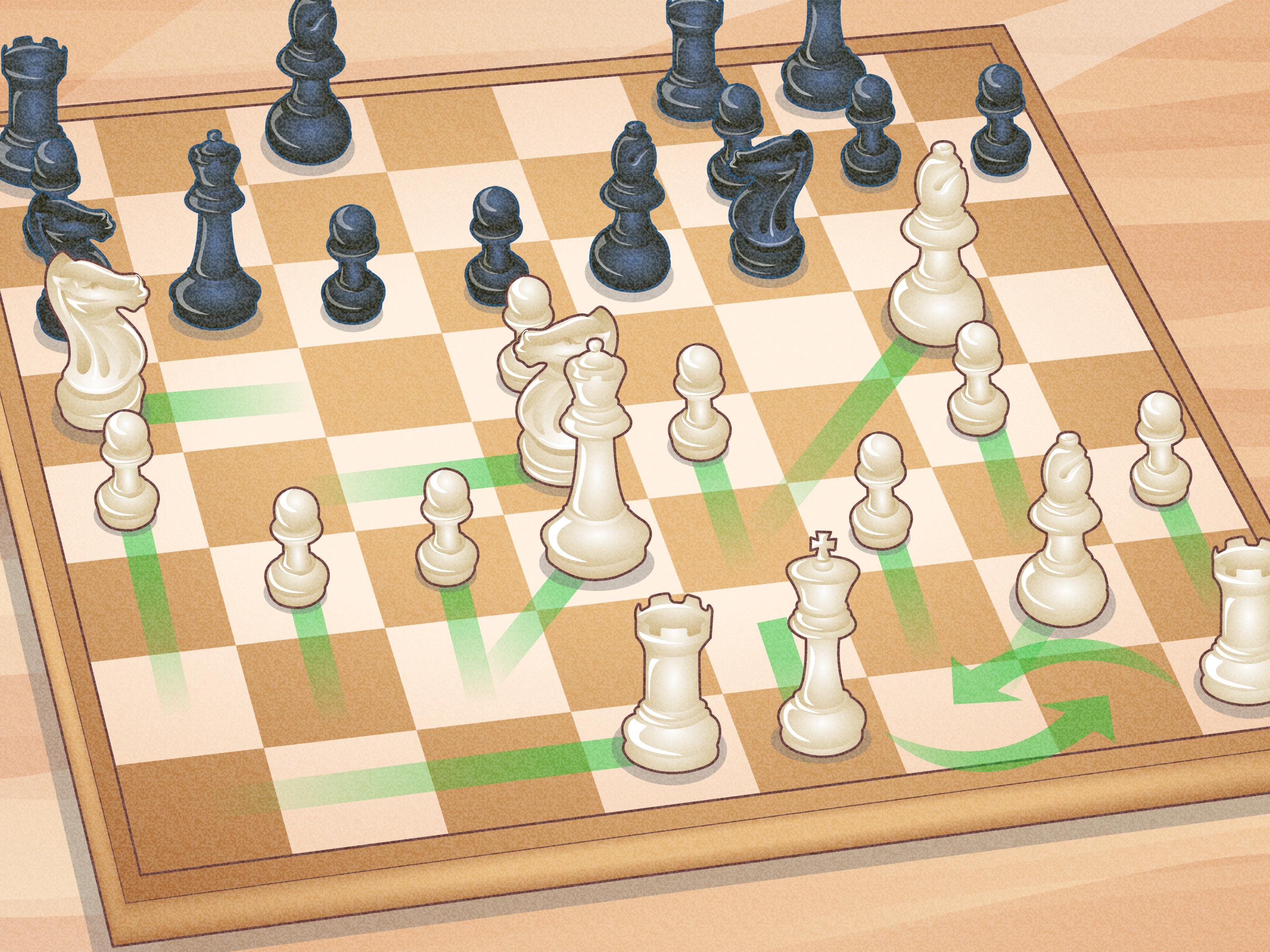
Before any problem is addressed, you must first question the very parameters that make up the situation.
It’s tempting to assume that we start out with the right point of view because it makes everything easier. But to achieve a proper conclusion, we need to first understand if our starting point even makes any sense. If we start out by questioning what we think we already know, often we will be surprised to find out we didn’t really know it, or maybe that it was a mistaken assumption.
After examining the theories that unconsciously rule your life, a lot of them will have to be discarded and replaced with better hypotheses. This is the starting point for a clear mode of thinking.
Sometimes it can be hard to organize all the thoughts in your head. I’ve always found that dialogue is a great way to sort things out. We created Cardinal specifically to help people find clarity through dialogue. I’d be at fault not to mention it in this article. It trully is something I use everyday and that helps me organize the ideas I have for business, content and personal problems. Worth checking out.
Start at the beggining, where no one wants to.
Real knowledge is intrinsic and must be built from the ground up.
Clarity emerges when you understand the basics. Only through a real understanding of the fundamentals can you stitch concepts together and come to relevant realizations. If you can’t comprehend complex concepts through the basics as you need them, then you are lost and simply memorizing.
Memorizing doesn’t lead to clarity—this is a key idea to keep in mind.
Clarity comes through deep understanding.
You can clearly see this in action in Feynman’s “Six Easy Pieces,” one of his early physics lectures. He explains mathematics in three pages, starting from the simplest concept “counting” all the way up to precalculus. He builds it in an unbroken chain of logic, not relying on any definitions.
Any topic/skill/discipline that you want to learn should have you not only starting with the fundamentals but mastering them.
Through mastery of the basics, everything else is made clearer, because every single thing must be derived from the basics. If you understand them well enough, you will be able to create and develop your own complex system or mode of thinking.
This is what we are after in almost any regard in life: to create something that is ours, that only we could create through applying our own deep understanding and exploration of a subject, influenced by others but ultimately made our own by applying the specific knowledge we have gathered throughout life.
If you want to think clearly, then you must humble yourself, go back to the fundamentals, and keep coming back.
Think like a Martian
A lot of Feynman’s way of thinking can be attributed to his father, who taught him how to think and not what to think.
He was the one who told him that knowing the names of things doesn’t constitute knowledge. He also taught him to engage in the thought experiment of supposing he was a Martian and the value of looking at things as if he knew nothing about them.
Faced with a certain problem or situation, he would ask, “If a Martian had just arrived on earth and was looking at this particular thing, what would he think about it? What questions would he ask?”
The point of this experiment was to try and discard all previous information he had on something and look at it from a new perspective. Through this process, he would come up with new questions to ask and hopefully reach new conclusions.
Curiosity and originality, the two things this experiment aimed to develop, interact with each other in a powerful way. The more you are interested in what makes something do something (curiosity), the more you will find out about random subjects, and eventually you will find that a lot of these random subjects interact with each other, thus developing a spiderweb of knowledge, where each string helps to support the whole frame. Through thinking about these subjects from a new lens (originality), you will understand them at a much deeper level, not simply decorating the names of things or assuming that they exist because someone told you they exist. In the spiderweb analogy, originality is what dictates the structural integrity of the strings you add to your web of knowledge.

The commitment to curiosity and originality is imperative for the clear thinker; they are what lead to the “Eureka!” moments in life.
What way do you have to think about it so you understand its simplicity.
Clear thinking will lead you to simplicity because beautiful solutions are ultimately simple.
When you are dealing with a situation or problem and find yourself in the midst of a complicated line of reasoning or action, then you are on the wrong path, or at least a more inefficient path. It’s probably better in that case to start over and simplify as much as possible.
This was made clear to me in the process of coding Cardinal. One day I spent eight hours trying to solve a problem by modifying the existing code and still wasn’t able to solve it. When I approached it the following day, I decided to start over from scratch and was able to solve it in 15 minutes. It was a very simple fix, but because I was so fixated on trying to make what I had already built work, I couldn’t see it. The solution is usually very simple.
This holds true for complicated fields. Feynman gives the example of the Ptolemaic System, where the orbits of the planets were supposed to be circles. But observations didn’t match simple circular orbits. So they added epicycles, smaller circles whose centers moved along larger circles. When that still didn’t work, they added epicycles upon epicycles, and the system became incredibly complex. The accurate explanation was much simpler. Planets actually moved in ellipses, and Newton showed that these elliptical motions emerge naturally from a simple inverse-square law of gravity: F = G(m₁m₂)/r²
This elegant yet simple principle explained what the previous system tried to in a very complicated manner.
“When we are near the answer, it looks much simpler than it has any right to be, and we have to understand that simplicity.” - Richard Feynman
Nature is without a doubt simpler than all our thoughts about it are.
If you can make something simpler, you should, be it your way of thinking, a product, your writing, etc.
Reflection walks
This isn’t a principle, but it is something Richard Feynman did a lot and credited with helping his thinking: going for walks in nature.
I find this important to include because historically a lot of great thinkers engaged in the habit of going for walks. This previous article I wrote goes a bit deeper into that.
When an exceptional group of people all engage in the same habit, you can be sure that there is something special behind it. We now also have plenty of studies to show the benefits of walks for our mental health. If you are confused, a walk is almost always the right choice to help your brain feel and think clearly.
Reflection walks in particular are a concept I picked up from Cal Newport, and I think that they fit perfectly here. The goal is to go into the walk with a problem or situation you are having trouble solving and make it the focal point of the walk (no smartphone or headphones), trying to review it and, while applying the previous principles, come to a new conclusion.
Be willing to take it all back.
The clip below is worth watching in its entirety.
Feynman argues he has better conversations with scientists than artists. He goes on to explain why, stating that scientists naturally have a more similar way of approaching problems that he can identify with. After two minutes, he realizes he’s wrong. You can see him pause for a brief second and recognize it. He immediately takes it back.
He remembered an encounter with a French historian and an American artist and the good conversations he had with them. He realized he could have a good conversation with any man who was an honest thinker and a hard worker.
This is the mark of a clear thinker: when a better idea pops up, he drops the old one immediately.
You can see the commitment not to fool oneself in full effect here. Yes, he did fool himself for a short time, but once he recognized he had been doing so, he denied it all and owned up to being wrong.
This commitment to the truth is, fundamentally, what defines the clear thinker. He won’t settle for a half-truth just to keep appearances, and he won’t tolerate lying to himself.
In life, you are going to be wrong a lot of times—it’s how the pursuit of truth goes. As you improve on the quality of your thinking, you improve on the quality of your problems. Better problems to solve make up a better life to live, but they only improve if you have the ability to recognize what you are doing wrong.
School taught you one way to think. Now you know another.
The clearest thinkers don’t have special brains. They just refuse to fool themselves.
Pick one problem you’re facing right now. Go for a walk. Question your assumptions about it. Ask yourself: “What would a Martian think?” See if you can explain the problem simply, like you would to a child.
That’s where clarity begins.
Tiago Hoshi,
Paths of Meaning